
Our Team.
Meet our team! We would love to include you it so don't hesitate to reach out. Our board of trustees serve three-year terms. Board meetings take place on the 3rd Thursday in January, April, July, and October at 10:00am in the Church. See the Events tab for more details.

Rob Holt
President & Treasurer
2026-2029

Erin Detrick
Vice President
2026-2029
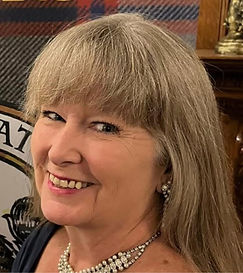
Sheila Winslow
Secretary
2025-2028

YOUR NAME HERE!
Trustee
Westport Church History
Early History
A brief history of the Church in Westport provides insight and context for the formation of the nonprofit Westport Community Church (WCC). This synopsis relies on facts in the WCC files as well as a published history of the local area. The WCC files contain among other documents a typescript history prepared around 1982. Although that manuscript is undated and no author is identified, it was likely written by the church Trustees (Gene Stillwell, Marge Roach, and George Filmer) and other members active at that time. Other details about the church are available in Volume 26 of the Mendocino Historical Review published jointly by the Kelley House Museum and Westport Village Society in 2012. Written by Thad M. Van Bueren, the volume is entitled “Belonging to Places: The Evolution of Coastal Communities and Landscapes between Ten Mile River and Cottoneva Creek.”
The original church was built along the bluff at the west end of Pacific Avenue on land donated for that purpose on December 28, 1880 by Albert and Peter Switzer (Mendocino County Deeds 49:32-33). It was a two story building completed sometime before August 14, 1883, the day William M. Hitchens and Martha F. King were married there by minister O. A. Ross (Van Bueren 2012:101). The Westport Baptist Church, operated by Trustees Jesse Vann, Alexander Gordon, and William Pennington occupied the lower story of the building while the upper story was leased to the Good Templars Lodge #338. The Good Templars were a group led by Trustees James T. Rogers, William Roach, and Peter Switzer that promoted temperance.
From its inception, the Church hosted interdenominational services according to May Sherwood “because there were so many different faiths in Westport and so few people” (Van Bueren 2012:99). A parsonage was later erected immediately south of the Church on a second parcel reportedly acquired by the Westport Baptist Church on September 3, 1889. Neil MacDonald granted the Church an easement to use water supplied to his hotel on September 18, 1889. In addition to services offered by the Baptists, visiting clerics of Catholic, Episcopalian, and other faith traditions were invited to hold services in the Church building.
The parsonage building reportedly was sold in 1941 and removed from the parcel when it was threatened by bluff retreat. Bluff erosion also began to destabilize the Church in the early 1950s. Most of the lumber from the Church was salvaged before the last remains of the building fell into the ocean on February 2, 1952 (Van Bueren 2012: 99-100). Around 1953 a new Community Hall was erected on the two adjoining church parcels at the foot of Pacific Avenue with funds raised by the Ladies Improvement Club. Two couples were married in that new single story structure built by community volunteers in 1954. The new building was used for a variety of community events, dances, religious services, and summer bible school.
By the late 1960s the bluff supporting the new building was also undercut. The Community Hall could no longer be used by 1975 (Van Bueren 2012:100). The Westport Baptist Church (WBC) eventually sold the two parcels at the foot of Pacific Avenue in 1981. A new parcel near the top of Abalone Street with a street address of 24900 was acquired by that organization on April 5, 1982 (Official Records 1347:8). The WBC Trustees, consisting at that time of Gene Stillwell, Marge Roach, and George Filmer, met January 20, 1983 to make important decisions recorded in minutes prepared by acting Secretary Jean Filmer.
(Van Bueren, Thad M. Administrative Handbook Westport Community Church, Inc. 2023)


Photos courtesy Westport Village Society
Transformation of the Church
The actions taken by those WBC Trustees led to the formation of the Westport Community Church later that year. First, a constitution was approved. Second, the process of incorporation was initiated with the aim of establishing tax exempt status. The three trustees then appointed Millie Saunders and Rose Lynn to the Board, bringing the total number of Trustees to five. Finally, they approved changing the name of the organization to the Westport Community Church (WCC). However, that new name for the Church organization was already informally in use as early as 1957 on the passbook of the organization’s main bank account.
The incorporation of the WCC was completed in 1983 as detailed in Chapter 2 of this manual. As detailed in the next chapter it took another seven years to fully qualify as tax exempt and title to the property at 24900 Abalone Street was not vested in the corporation until 2019. Meanwhile, a new church was built by community volunteers in 1984 and 1985 on the parcel at 24900 Abalone Street. It was based on plans and permits approved by the County that remain in the WCC files. The structure was completed before a May 12, 1985 meeting of the WCC took place there (Van Bueren 2012:100).
Throughout its operation from the 1880s to the present the various buildings owned by the Church organization provided a place to hold diverse religious services and secular gatherings. It was never exclusively used by a single denomination. Activities on the church properties changed over time as the community and American society evolved. Spiritual services are now infrequent and have broadened to include Quaker, Jewish, and Buddhist offerings. Secular activities are the predominant use and currently encompass activities such as public meetings, classes, recreation, a community food garden, and holiday celebrations and festivities. The Fort Bragg Unified School District leased part of the property from 2000-2018, operating a K-5 school in a modular classroom until 2010. That building was later sublet to the Mendocino Coast Recreation and Park District for fitness classes. The modular building was eventually acquired by WCC in 2018.
The two Church organizations (WBC, later superseded by WCC) received support over that length period of operation from many other local organizations. That cooperation came from the Good Templars in the late nineteenth century, the Ladies Improvement Club in the 1940s and early 1950s, ad hoc groups like the Westport Citizen’s Committee and Community Sunday School in the 1960s and 1970s, and nonprofit Westport Village Society, Inc. from the 1990s up to the present time.
(Van Bueren, Thad M. Administrative Handbook Westport Community Church, Inc. 2023)

Photos courtesy Westport Village Society
